
Blogs
Innovative Library Activities to Foster a Love for Reading Among Students
Innovative Library Activities to Foster a Love for Reading Among Students
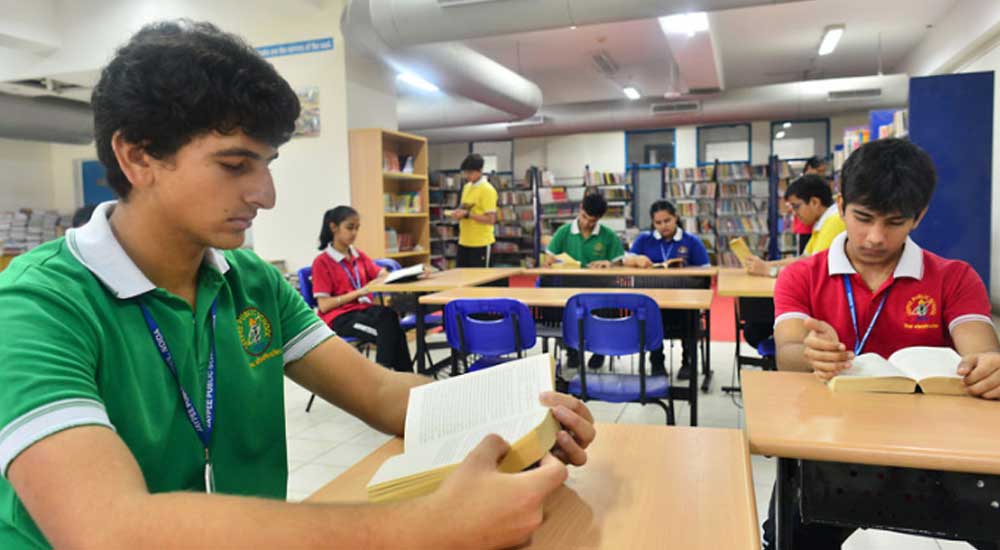
A child’s reading is essential for both success in life and school. Reading opens the doors to knowledge and helps build fundamental skills such as language development, critical thinking, and even empathy.
While parents can do their part to encourage children to read, having a strong school library system in place keeps children more engaged in finding answers to their questions. As per research, children who read over 20 minutes a day/5 days a week, are exposed to more than 1.8 million words a year.
To create this love for reading, schools must create multiple school library activities with state-of-the-art infrastructure.
Creative library activities for students
The school library provides multiple activities with creative ideas that help attract children to enjoy reading. These activities are aimed at making the library an active place where children can visit, explore or read virtually. Some planned activities that can help encourage reading habits for children in school are:
A. Bookmark making:
To keep children entertained and make them keep coming back to the library, you can encourage them to make bookmarks. Here’s a simple idea for activities for library period.
Supplies needed:
- Card stock paper or construction paper (if you want to laminate it later)
- Markers
- Stickers
- Paint Stickers
- Paper cutter
- Laminator
How to make a bookmark:
- Cut out the card stock paper using a paper cutter into strips 1.5 inches wide.
- Let the children choose the colour of the bookmarks and decorate them the way they want.
- Once the children have finished making the bookmarks, you can laminate them to help children use them again.
- You can also let children use stickers, glitter, and more.
B. Book reviews:
Children get more excited when they receive a reward for their actions. So, why not make reading rewarding in the library activities? Let the children review the books they read, and then have a session where children can read the reviews they have written. Not only will other children learn about the content of the book, but they will also be engaged.
C. Book jacket designing:
You can also encourage children to read by having a book jacket design contest. Children can choose their favourite book and then design a jacket for it. The prize could be seeing their jacket actually on the book in the school library. For this, you would need the following:
- Thick paper or cardboard
- Pen, pencil, eraser, and ruler to draw out the book jacket
- Colour pencils and paints to paint the jacket
- A laminator (if possible) to help keep the drawing intact
D. Storytelling:
Children love to tell stories or even to hear a story. So, why not have a storytelling session once a month? You can pick a child who chooses the book to be read to the class. If you know the name of the book in advance, you can also make some drawings or puppets to help keep the children engaged.
E. Reading aloud:
For younger children, reading a story out aloud is a perfect way for them to not only read the book but also improve their speech and vocabulary. Having short reading aloud sessions during School Library Activities is the perfect way to help them develop their communication skills. It also helps others develop empathy, as listeners need to concentrate on what is being read.
F. Story composition:
How about letting students decide how the story ends? You can make this a fun session for activities for the library period. Select a story, and read it out to the class. But do not read the ending. You can then ask the students to make their own endings. Another library activity is to encourage children to compose their own stories and read them out in class. This not only helps children write but also encourages them to think creatively.
G. Book scavenger hunt:
Getting children to read might be hard, but getting them to keep reading is difficult. You can make reading fun by having a book scavenger hunt. Separate the children into groups and then give them a map or a list of books to find. They can go looking around the school, and the winning team gets a reward. Some tasks you can include in the hunt are activities such as ‘what is the main character wearing during a specific scene’, so the child will have to read the book.
H. Role-playing:
You can always organize a role-playing day where children dress up as their favourite character from a book or a favourite author. For older children, you can make it more interesting by including difficult tasks such as ‘speaking in the language the character uses’ or ‘only saying words starting with specific letters’.
I. Celebrating authors: You can always host a special day for authors based on their birthdays.
For example, 10th October is R.K. Narayan Day and 19th May is Ruskin Bond Day. Children can choose books from those specific authors to read and tell everyone why they liked the book.
Conclusion

If students do not find reading interactive, then they might never pick up a book. Introducing a hybrid approach of reading and playing, such as the One Nation Reading Together Day celebrated at Jaypee Public School, can help encourage more children to read. But each child has different tastes. So, allot books as per the interest of the child that are age-appropriate.
To promote the intellectual pleasure of reading, other than regular classes, various school library activities can be conducted to help keep students engaged in the art of book reading.
FAQs
What are some fun library activities for students?
A: Some fun library activities that can be done in school include bookmark making, storytelling sessions, book scavenger hunts, book jacket designing, reading aloud, and role-playing as book characters.
What are good activities for a school library period?
A: Good activities for a library period include reading aloud, story composition exercises, literary games, and organizing author days. These help in cultivating curiosity and reading habits.
Why are library activities important for students?
A: Library activities help nurture critical thinking, imagination, communication, and empathy in students. They make reading both a collaborative and an enjoyable experience for all.
Categories
| Importance of childhood education |
Latest Blogs
| How CSET Helps Students Become Future Tech Leaders |
| 5 Questions Parents Should Ask Before Choosing the Best School in Noida |
| Why Sustainability Education is Essential in Schools Today |
| 7 Ways to Prepare Your Child for Pre-Primary School |
| The Importance of Parental Involvement in School Education |
| How Play-Based Learning Enhances Brain Development in Young Children |
| How Concept-Based Learning Is Replacing Rote Memorization in Schools |
| Step-by-Step Process for Securing Admission in Jaypee Noida |
| How Students Can Help Reduce Plastic Waste at Home and School |
| 5 Innovative School Practices Supporting Sustainability and SDG Alignment |