
Blogs
How Concept-Based Learning Is Replacing Rote Memorization in Schools
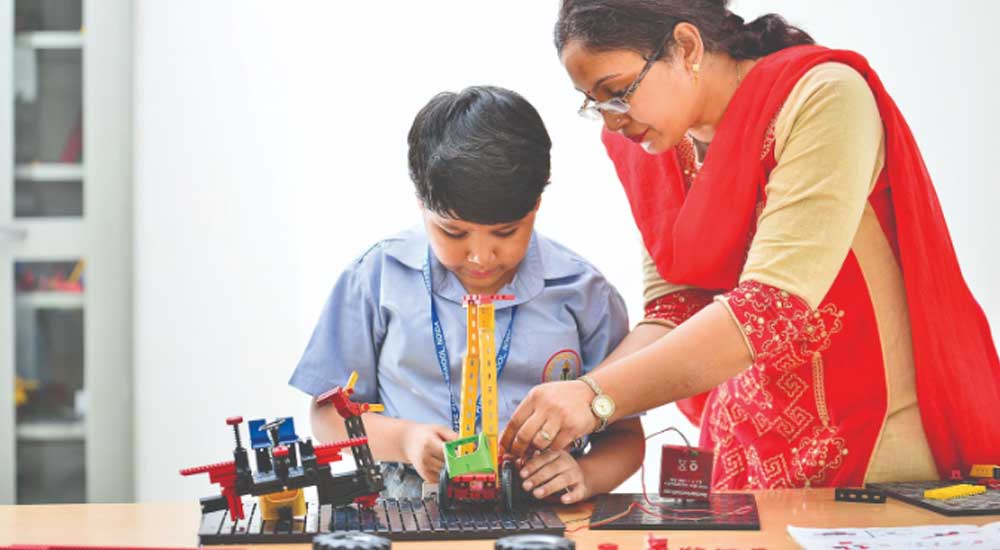
How Concept-Based Learning Is Replacing Rote Memorization in Schools
Is your child truly learning, or just memorizing?
This is a question that a lot of parents, teachers, and surprisingly, students are starting to ask for a very good reason. For years, the traditional system has been more or less about memorization – of facts, dates, formulas, definitions. The storing of information without any deeper understanding of it. This was the good old school model working great in the past, but not anymore.
At Jaypee School Noida, we say it’s time for a change. Say hello to concept-based learning – a mind-blowing new way of doing things that’s all about understanding, critical thinking, and application of knowledge to the real world. And it’s all the more effective when paired with active learning techniques. Say hello to the new learning model for our students.
Let’s explore why concept-based learning is taking center stage in education and how it's replacing the outdated system of rote learning.
What Is Rote Memorization, and Why Is It Fading?
Rote learning is based on the idea of repetition. When you consider this, how many of us have been asked to memorize multiplication facts, historical dates, or biology terms without ever having a true understanding of the “why.” This method, more times than not, results in the learner receiving good grades in the short term without having a true, lasting understanding.
The main drawbacks of rote memorization include:
Lack of conceptual clarity
Poor retention over time
Inability to apply knowledge in real-life situations
Minimal engagement and creativity
In today’s society, we need more than memorization. We need learners who can think critically, solve problems, and process real-world applications of learning. Concept-based learning and active learning methods are the best methods that should be adapted in the present times.
What Is Concept-Based Learning?
Concept-based learning is a pedagogical approach for meaningful learning in which the emphasis is on the grasp of generalizable concepts rather than rote detached facts. Instead of just memorizing snippets, students are urged to get the whole picture — the “why” behind the “what.”
For instance, students would not just learn the formula for finding an area; they would work to understand why the formula works or does not work, how it would apply to different shapes, and where the concept of area has real-world applications. Through deeper understanding, we increase retention and transfer.
Project-based learning shifts the focus from “What do I need to remember?” to “What do I need to understand?”
The Role of Active Learning Methods
The active learning approach is one of the main reasons behind the concept of learning success. These techniques involve students in the process of learning, turning them from passive recipients into active participants.
At Jaypee School Noida, our classrooms are vibrant centers of skill-based education and hands-on discovery. Some of the commonly used active learning methods that we use include:
Group projects and collaborative problem-solving
Case studies and real-world scenarios
Role plays and simulations
Inquiry-based experiments
Brainstorming sessions and reflective journaling
These methods encourage the students to not just learn concepts — they experience them.
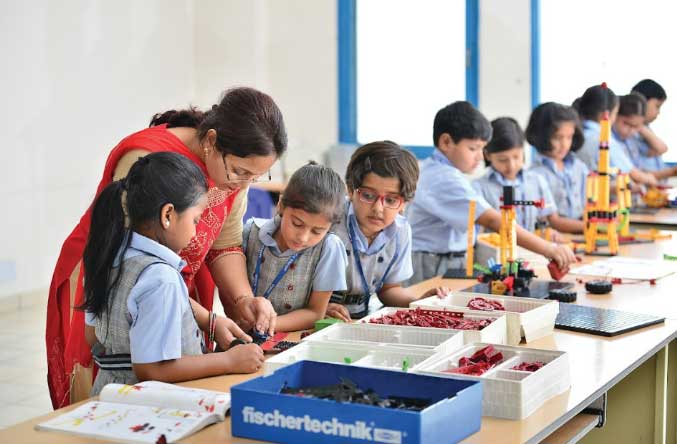
Concept-Based Learning vs. Rote Memorization: A Quick Comparison
Focus
Rote Memorization: Emphasizes repetition of facts and data.
Concept-Based Learning: Emphasizes understanding of core ideas and concepts.
Learning Depth
Rote Memorization: Encourages surface-level learning.
Concept-Based Learning: Promotes deep, meaningful learning and comprehension.
Application
Rote Memorization: Limited to test-taking and academic recall.
Concept-Based Learning: Enables real-world application and cross-disciplinary understanding.
Engagement
Rote Memorization: Often passive and monotonous for students.
Concept-Based Learning: Highly engaging through active learning methods like projects, discussions, and experiments.
Critical Thinking
Rote Memorization: Offers minimal opportunity for analytical thinking.
Concept-Based Learning: Encourages analysis, synthesis, and evaluation of information.
Why Are Schools Making the Shift?
Educators and institutions across India and around the world are beginning to understand the limitations of traditional learning models. Here’s why the shift to concept-based learning is gaining momentum:
1. Future-Ready Students
Today’s employers seek problem-solvers, communicators and those who think critically. Concept-based instruction in turn more aptly prepares students for the messy reality of real-life questions, and not just standardized tests.
2. Better Academic Performance
Active learning has been shown to improve student performance. They remember more, understand it better and then do better on those exams and projects.
3. Greater Engagement
Let’s face it — memorizing pages of notes is boring. But exploring a topic through experiments, discussion, and group activities? That’s exciting. When students are engaged, they naturally learn more.
4. Personalized Learning
Effective learning enables teachers to personalize lessons based on the learner's interests. A visual learner, a tactile explorer, or a discussion-based learner are all engaging with active learning approaches.
How Jaypee School Noida Leads the Way
We at Jaypee School Noida are privileged to be part of this new and dynamic educational revolution. Concept-based learning is not only a compulsion in curriculum design, classroom practice and teachers’ training.
Here’s how we bring this philosophy to life:
Interdisciplinary Learning
We design lessons that integrate concepts across subjects. For instance, a lesson in science might connect with math, geography, and even art — encouraging students to see the bigger picture.
Inquiry-Based Projects
Our students are not simply given answers, they ask questions, conduct research and come to conclusions themselves. This mode encourages inquisitiveness, self-reliance and self-confidence.
Use of Technology
The use of digital devices such as interactive whiteboards, virtual laboratories, and learning applications facilitate the active modes of learning through visualizing abstract concepts and making them practical.
Teacher as a Facilitator
Teachers do not lecture only. They guide, mentor and facilitate — assisting students to move through their own learning processes using inquiry and exploration.
Parents, Here’s How You Can Support the Change
It is not only the role of the school to change rote memorization to concept-based learning, but a collective one. Being a parent you can be a strong force by:
Encouraging your child to ask questions at home
Focusing on understanding over grades
Supporting project-based assignments
Discussing real-world applications of what they’re learning
When parents reinforce the value of active learning methods, students feel more confident and supported in this new way of learning.
The Future of Education Is Here
In a world where information is just a Google search away, the real skill is not remembering — it’s understanding. At Jaypee School Noida, we are proud to champion concept-based learning and equip our students with the tools they need to thrive in the modern world.
As we continue to replace rote memorization with active learning methods, we’re not just changing how students learn — we’re changing how they think.
Let’s Rethink Learning
To answer our original question: Is your child truly learning, or just memorizing? — we believe it’s time for every parent and educator to reflect on this.
It is not a trend but a need to move towards concept-based learning. With active learning techniques, it produces curious, capable and confident learners prepared to face whatever awaits them in the future.
Here at Jaypee School Noida we are not merely preparing students to pass in the exams, we are preparing them to live.
It is time to discover a new approach to child learning. Visit Jaypee School Noida to understand the way concept-based learning is developing future leaders today.
FAQ
1. What is the main difference between concept-based learning and rote memorization?
The major dissimilarity has to do with their mindset. By definition, rote memorization implies the process of committing to memory through repetition and recitation without really understanding the meaning. On the other hand, concept-based learning aims at the development of a strong foundation in students and involvement in the process of analyzing, questioning, and demonstrating the material learned.
2. How do active learning methods enhance concept-based learning?
Active learning methods act as a link between learning and application for students while also being an important driver of learning. Such topics as debates, group projects, tests, experiments, and real-world problems force students to concentrate on a subject from different sides and involve all their thinking abilities. It helps in knowledge acquisition, critical thinking, independence, which are the key components of the concept-based learning.
3. Can concept-based learning still prepare students for exams and standardized tests?
Indeed, concept-based learning students usually excel in exams since they learn the content at a deeper level. They can transfer the concepts to different questions instead of using memorized questions. This model develops confidence and competence.
4. What responsibilities do teachers play in concept-based learning?
In a concept-based model educators are the facilitators. Unlike monologues, which involve hectic textbook delivering and note-taking, their role is mainly directing students in the exploration of new ideas, thinking, and relating facts. They also include active learning in their classes to take the students through unique situations that make the learning experience personal, engaging, and meaningful.
5. How can parents support concept-based learning at home?
Parents’ support can be expressed through their encouragement of questioning the “how” and “why” things are, talking about the applications of subjects being learned, and shifting focus from scoring high marks to appreciating the concepts. Home-studying, concept-based learning through the projects, families reading out loud, and open discussions on school subjects are a great help for children's academic life.
Categories
| Importance of childhood education |
Latest Blogs
| How CSET Helps Students Become Future Tech Leaders |
| 5 Questions Parents Should Ask Before Choosing the Best School in Noida |
| Why Sustainability Education is Essential in Schools Today |
| 7 Ways to Prepare Your Child for Pre-Primary School |
| The Importance of Parental Involvement in School Education |
| How Play-Based Learning Enhances Brain Development in Young Children |
| How Concept-Based Learning Is Replacing Rote Memorization in Schools |
| Step-by-Step Process for Securing Admission in Jaypee Noida |
| How Students Can Help Reduce Plastic Waste at Home and School |
| 5 Innovative School Practices Supporting Sustainability and SDG Alignment |