
Blogs
What are Extra co-curricular Activities for Kids in School & Why Every Student Needs it?
What are Extra co-curricular Activities for Kids in School & Why Every Student Needs it?
What comes to your mind when someone mentions the word “school”? Most likely, you envision classrooms, textbooks, assignments, quizzes, and tests. However, there is one activity in school that is just as important for a student's development as classes: extra co-curricular activities. These activities are an integral and essential part of school life and aid in a child's development outside the classroom setting.
As a parent, you wish the best for your child's future, and extra co-curricular activities in schools can be a big part of that. They assist your child in learning skills that cannot be taught in textbooks and offer chances for socialization, leadership, creativity, and even better academic performance.
But what are extra co-curricular activities? How would you define extra co-curricular activities in school? How do they contribute to the holistic development of your child? In this article, we will discuss in detail the scope of extra co-curricular activities in school and their impact on students' holistic development.
What are extra co-curricular activities?
Co-curricular activities are those activities that take place outside the normal academic curriculum. They are optional, non-academic activities that are or are not directly connected to your child's classroom learning. From sports and music to drama clubs and volunteer programs, these extra co-curricular activities are intended to enhance your child's school life by allowing them to gain well-rounded skills that will serve them well in life.
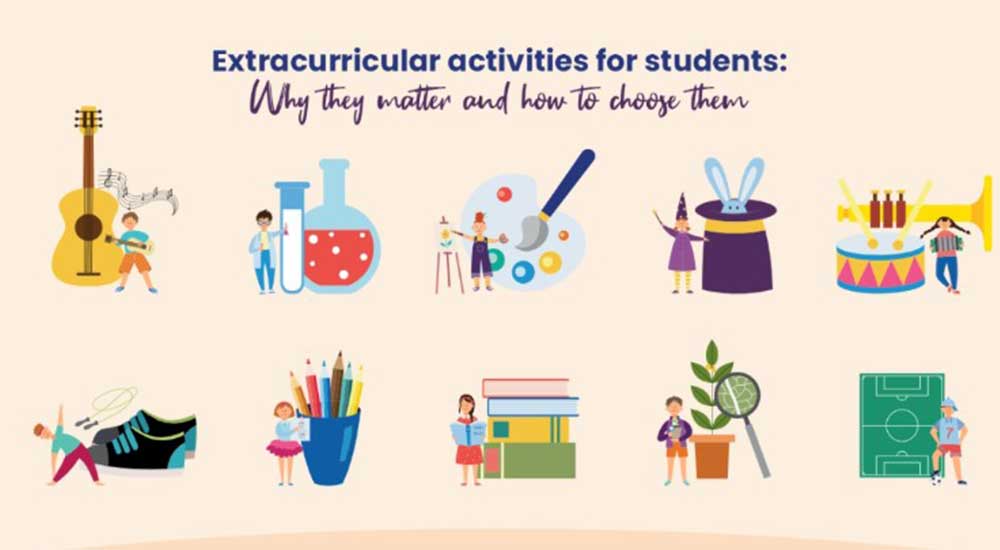
Typical extra co-curricular activities for kids in school include:
- Sports teams (e.g., soccer, basketball, swimming)
- Music and Art (e.g., choir, band, painting)
- Linguaphile and Theatre clubs
- Prefectorial Board - Student government and leadership positions
- Editorial Boards
- Volunteer work and community service
While these extra co-curricular activities for students are normally ‘extra’ and not on the officially sanctioned syllabus, they provide tremendous value to your child's development outside the classroom.
Why parents should encourage extra co-curricular activities for kids in school
As a parent, you might wonder how co-curricular activities play a significant role in your child’s life. Let us explain in more detail the most important components of extra co-curricular activities in school?:
1. Time Management Skills
Among the numerous benefits that your child can gain from participating in co curricular activities in school is better time management. Your child’s planning skills can improve with activities like schoolwork, home assignments, and extracurricular commitments. Although challenging, over time, they can learn to create a balance between these responsibilities, making them more organized and disciplined.
How it helps? The ability to juggle multiple tasks is a life skill that will serve them well beyond school, especially in their future careers.
2. Improving Social Skills
Extra co-curricular activities will give your child a chance to engage with others outside of the classroom?. As these activities are typically held in groups, your child will foster important social skills like teamwork and communication. By participating in extra co-curricular activities in school, they will learn to deal with different personalities and develop meaningful friendships.
How it helps? The social skills they learn in these activities are very important for their later career and personal life.
3. Boosting Self-Confidence
Engaging in extra co-curricular activities helps your child discover their hidden talents and significantly contributes to an increased sense of self-worth. Accomplishments in these co-curricular activities in school, whether winning a competition, debate, or completing a challenging project, can do wonders for their confidence.
How it helps? The recognition they receive for their efforts reinforces the belief that they are capable and talented individuals.
4. Better Results in School
Participating in co-curricular activities, such as clubs, sports, inter-schools, and inter-house competitions, actually improves your child’s academic performance, which most parents do not foresee. For one, these activities reduce the academic pressure by giving a mental break, thereby refreshing the brain. Additionally, some activities, such as science fairs or reading clubs, enhance academic knowledge and inspire them to learn new things.
How it helps? Children who take part in co-curricular activities in school are more goal-oriented and engaged, academically, professionally, and personally.
5. Promoting Physical Health & Creativity
Freedom from academic work, whether it’s running on the track field or drawing, these activities for kids in school promote physical development, creativity, and problem-solving. They allow children to engage in something they enjoy and focus on the present moment, which can be a form of mindfulness practice.
How it helps? These hobbies help them focus on the present and approach challenges with fresh perspectives.
Types of Extra co-curricular Activities for Kids in School


As a parent, it’s important to understand the wide variety of co-curricular activities in school available to your child. Depending on their interests, they might thrive in one or more of these extra co-curricular activities in school?. Categories -
1. Sports and Physical Activities
Physical activities such as football, basketball, or even sports such as shooting or badminton instill discipline, teamwork, and determination in your child. Such activities for kids in school give a sense of belonging, enhance physical well-being, and foster good life skills like leadership and resilience.
2. Arts and Creative Activities
If your child has a flair for expressing their talents through music, dance, drama, or visual art, these extra co-curricular activities will help develop their creativity and emotional intelligence. The arts, in addition to developing creativity, also impart patience, concentration, and emotional stability. It's also an effective tool by which children can express and work out emotions and build self-expression.
3. Leadership and Social Responsibility
Engaging your child in leadership activities like student government or volunteer work. These extra co-curricular activities for students allow your child to learn public speaking, decision-making, and conflict-resolution skills while contributing positively to the community. Such experiences foster a sense of responsibility and help children learn empathy as well as take into account society's needs.
4. Academics and Intellectual Clubs
If your child enjoys learning and stretching his mind, academic clubs such as debate, science fair, or mathematics competition provide forums for furthering knowledge and intellectual activities. These co-curricular activities help with critical thinking, problem-solving, and give your child an academic edge by equipping them for the future demands.
Why Schools Should Promote Extra co-curricular Activities for Students
Understanding the above associated benefits, it goes without question that schools must seek to have students involved in extra co-curricular activities.
Such activities help your child to:
- Think widely and take initiatives in activities outside the classroom.
- Feel part of the community and appreciate the school.
- Associated with academics and aid participation towards becoming a complete person.
- Gain experiences that they can utilize in their college applications and employment resumes.
- Participate in activities so that they may find new interests and talents as well as directions that are presently unexplored.
Conclusion
Extra co-curricular activities in school? are more than just an extra element in a child’s schedule. They are essential in augmenting the development of your child from several angles. They prepare them physically, socially, and mentally by helping nurture academic performance and self-esteem. So, the next time you head to school, pause and think about the variety of activities your child can participate in, and take advantage of the possibility to help them enjoy, develop, and have a wonderful time.
Frequently Asked Questions
Q. What are extra co-curricular activities benefits?
Extra co-curricular activities offer a range of benefits, including effective time management, the ability to socialize, improved academic performance, and increased self-efficacy. In addition, these activities are good for the body and mind.
Q. Can extra co-curricular activities improve academic performance?
Of course, extra co-curricular activities provide a break from the stress of academic work and improve most functions of the mind, like focus, discipline, and performance.
Q. Are extra co-curricular activities in school compulsory?
No, most extra co-curricular activities are optional for your child. Regardless, a lot of schools expect and strongly suggest their students take part in these activities as they offer children an opportunity to take care of themselves and progress in several aspects.
Categories
| Importance of childhood education |
Latest Blogs
| How CSET Helps Students Become Future Tech Leaders |
| 5 Questions Parents Should Ask Before Choosing the Best School in Noida |
| Why Sustainability Education is Essential in Schools Today |
| 7 Ways to Prepare Your Child for Pre-Primary School |
| The Importance of Parental Involvement in School Education |
| How Play-Based Learning Enhances Brain Development in Young Children |
| How Concept-Based Learning Is Replacing Rote Memorization in Schools |
| Step-by-Step Process for Securing Admission in Jaypee Noida |
| How Students Can Help Reduce Plastic Waste at Home and School |
| 5 Innovative School Practices Supporting Sustainability and SDG Alignment |