
Blogs
Why Sustainability Education is Essential in Schools Today
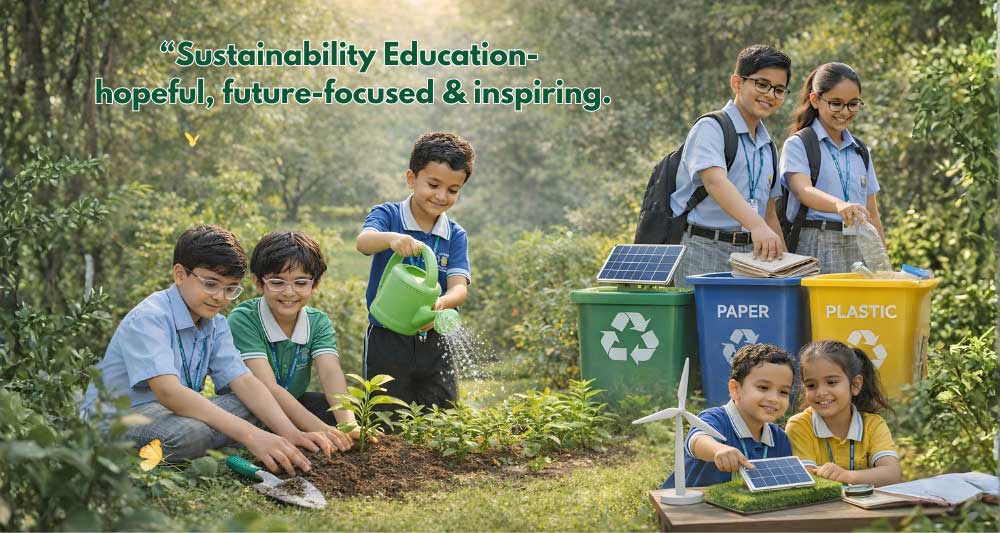
Why Sustainability Education is Essential in Schools Today
Why is Sustainability Education Essential in Schools Today?
In the fast-paced present-day world, children require more than classroom knowledge. They need skills, values, and awareness that help them build a responsible and resilient future. This is where Sustainability Education in Schools plays a transformational role.
At Best School in Noida and Greater Noida, education focuses not just on academic excellence but also on preparing students to face global challenges with confidence and compassion.
The contemporary student needs valuable learning experiences that help them understand environmental challenges, social justice, and sustainable consumption. By introducing Sustainability Education in Schools early, these concepts become part of a child’s mindset. Sustainability learning becomes practical and impactful when combined with meaningful Co-curricular Activities in Schools.
The Growing Importance of Education for Sustainable Development
The last few decades have shown the urgency of sustainable living. Climate change, environmental degradation, water shortages, and biodiversity loss are real and pressing issues. Sustainability Education in Schools is no longer optional — it is essential.
Students today must think beyond textbooks. They need real-life problem-solving skills developed through Sustainability Education in Schools. When students understand environmental issues and their solutions, they become positive change-makers.
How Sustainability Education Builds Future-Ready Learners
1. Promotes Critical Thinking
Environmental issues are complex. Through Sustainability Education in Schools, children learn to analyze pollution, climate conditions, and waste management challenges critically.
2. Encourages Compassion and Responsibility
Activities such as plantation drives, recycling programs, and water conservation initiatives help students develop a sense of responsibility toward the environment. Co-curricular Activities in Schools empower children to see themselves as change agents.
3. Builds Global Awareness
Sustainability is a global conversation. Students learn about international goals such as the UN Sustainable Development Goals (SDGs) and understand their role as global citizens.
4. Supports Holistic Growth
Education is more than academics. Sustainability Education combined with Co-curricular Activities helps students develop emotional intelligence, leadership, teamwork, and communication skills.
Role of Co-Curricular Activities in Supporting Sustainability Education
Co-curricular activities ensure that learning is meaningful and dynamic. Sustainability learning is reinforced through:
- Eco clubs promoting environmental stewardship
- Recycling and waste segregation drives
- Art projects using eco-friendly materials
- Water and energy conservation initiatives
- Community clean-up campaigns
These activities strengthen classroom knowledge while developing leadership, teamwork, confidence, and empowerment — essential qualities for responsible global citizens.
Sustainability Education and 21st-Century Skills
21st-century skills include collaboration, creativity, digital literacy, critical thinking, and global citizenship. Sustainability Education in Schools is an ideal foundation to nurture these skills.
Creating Environmentally Conscious Citizens
Sustainability is a long-term commitment. When schools prioritize Sustainability Education, they cultivate individuals who genuinely care about the planet and society.
A Better Tomorrow Begins in the Classroom
The world needs thinkers, innovators, and compassionate leaders. Such leadership begins with Sustainability Education in Schools. When sustainability becomes part of the school culture, it creates a lasting learning ecosystem.
Empowering Students to Lead a Greener Future
Sustainability Education prepares students to become responsible decision-makers, innovators, and community leaders. The values they learn during school years shape their lifelong choices.
Sustainability education is not just a subject — it is a lifelong value system. By learning to protect the environment and think responsibly, students grow into true global citizens.
Frequently Asked Questions (FAQs)
1. Why is Sustainability Education important for school students?
Sustainability Education helps children understand how their daily choices affect the planet. It teaches climate awareness, conservation of resources, responsible consumption, and problem-solving skills.
2. How does sustainability become part of daily learning?
Sustainability can be integrated into academic subjects, campus practices, eco-clubs, plantation drives, recycling activities, and classroom projects so students experience it practically.
3. How do Co-curricular Activities enhance sustainability learning?
Gardening, recycled crafts, science fairs, and community drives allow students to apply sustainability lessons practically while building leadership, empathy, creativity, and teamwork.
4. How does sustainability education benefit future careers?
Students gain critical thinking, solution-oriented approaches, and ecological awareness — qualities highly valued across industries such as engineering, business, healthcare, design, and technology.
Categories
| Importance of childhood education |
Latest Blogs
| How CSET Helps Students Become Future Tech Leaders |
| 5 Questions Parents Should Ask Before Choosing the Best School in Noida |
| Why Sustainability Education is Essential in Schools Today |
| 7 Ways to Prepare Your Child for Pre-Primary School |
| The Importance of Parental Involvement in School Education |
| How Play-Based Learning Enhances Brain Development in Young Children |
| How Concept-Based Learning Is Replacing Rote Memorization in Schools |
| Step-by-Step Process for Securing Admission in Jaypee Noida |
| How Students Can Help Reduce Plastic Waste at Home and School |
| 5 Innovative School Practices Supporting Sustainability and SDG Alignment |